HomeAbout UsCapabilites
Services
Audit & Assurance
Financial Statement audit & attestationFinancial Reporting advisory
Advisory
Link 1Link 2Link 3
Tax
Link 1Link 2Link 3
Business Services & Outsourcing
Link 1Link 2Link 3

Service

Audit & Assurance

Tax & Regualtory

Advisory

Bussiness & Outsourcing

Audit & Assurance

Financial Atatement Audit & Attestation

Financial Reporting Advisory

Tax & Regualtory

Corporate Tax

Indirect Tax

Finacial Sector

Family Office,estate & succession Planing

Advisory

Mergers & acquisitions

Valuation

Due diligence

Corporate finance & investment banking

Start-up advisory

hgghhgdgfhhgd

IPO advisory

IT risk advisory & assurance

Sustainability & ESG

BFSI advisory

Management consulting

Business & Outsourcing

Finance & Accounting Outsourcing

Global Outsourcing

Compliance

Fund Accouting & Trust Accounting

Virtual CFO

Payroll

Services

Audit & Assurance
Tax & Regulatory
Advisory
Business & Outsourcing

Audit & Assurance

Financial Statement Audit & Attestation

Financial Reporting Advisory

Featured

What is the COSO framework?

September 24, 2024

Going Concern: What It Means for Your Business

August 8, 2024

Fraudulent Financial Reporting

June 19, 2024

Tax & Regulatory

Corporate Tax

Indirect Tax

Financial Sector  

Family, Office, Estate & Succession Planning

Featured

What is the COSO framework?

September 24, 2024

Going Concern: What It Means for Your Business

August 8, 2024

Fraudulent Financial Reporting

June 19, 2024

Advisory

Mergers & Acquisitions

Valuation

Due Diligence

Corporate Finance & Investment Banking

Start-up Advisory

Promoter Restructuring & Succession Planning

IPO Advisory

IT Risk Advisory & Assurance

Sustainability & ESG

BFSI Advisory

Management Consulting

Featured

What is the COSO framework?

September 24, 2024

Going Concern: What It Means for Your Business

August 8, 2024

Fraudulent Financial Reporting

June 19, 2024

Business & Outsourcing

Finance & Accounting Outsourcing

Global Outsourcing

Compliance

Fund Accounting & Trust Accounting

Virtual CFO

Payroll

Featured

What is the COSO framework?

September 24, 2024

Going Concern: What It Means for Your Business

August 8, 2024

Fraudulent Financial Reporting

June 19, 2024

Services

Services

Audit & Assurance
Tax & Regulatory
Advisory
Business & Outsourcing

Audit & Assurance

Financial Statement Audit & Attestation

Financial Reporting Advisory

Featured

What is the COSO framework?

September 24, 2024

Going Concern: What It Means for Your Business

August 8, 2024

Fraudulent Financial Reporting

June 19, 2024

Tax & Regulatory

Corporate Tax

Indirect Tax

Financial Sector  

Family, Office, Estate & Succession Planning

Featured

Invoice Management System (IMS) under GST

September 18, 2024

GST IMPORTANT ANNOUNCEMENTS via CIRCULAR NO. 230 to 233 dated. 11th Sept. 2024

September 18, 2024

GST IMPORTANT ANNOUNCEMENTS IN 54TH GST COUNCIL MEETING (September 9, 2024)

September 13, 2024

Advisory

Mergers & Acquisitions

Valuation

Due Diligence

Corporate Finance & Investment Banking

Start-up Advisory

Promoter Restructuring & Succession Planning

IPO Advisory

IT Risk Advisory & Assurance

Sustainability & ESG

BFSI Advisory

Management Consulting

Featured

Emerging Trends in AIFs: Key Regulatory Developments in FY 2025–26

February 11, 2026

TAXATION OF INFLUENCERS AND CONTENT CREATORS: THE NEW FRONTIER

June 24, 2025

Corporate Social Responsibility (CSR)

June 23, 2025

Business & Outsourcing

Finance & Accounting Outsourcing

Global Outsourcing

Compliance

Fund Accounting & Trust Accounting

Virtual CFO

Payroll

Featured

LEAVE & LAW POLICIES FOR EMPLOYEES IN INDIA

May 9, 2024

SOCIAL SECURITY LAWS- PF & ESIC

April 20, 2024

SOX Compliances

January 6, 2023

Audit & Assurance
Financial Statement Audit & AttestationFinancial Reporting Advisory
Advisory
Mergers & AcquisitionsValuationDue DiligenceCorporate Finance & Investment BankingStart-up AdvisoryPromoter Restructuring & Succession Planning IPO Advisory IT Risk Advisory & AssuranceSustainability & ESGBFSI advisoryManagement Consulting
Tax & Regulatory
Corporate TaxIndirect taxFinancial sector  Family, office, estate & succession planning
Business & Outsourcing
Finance & Accounting OutsourcingGlobal outsourcingComplianceFund accounting & Trust AccountingVirtual CFOPayroll
Solutions
Multinational CorporatesIndian CorporatesStartups
BlogsBlogsCareersContact UsContact Us
Schedule a consultation

Economic crisis in Sri Lanka

By
Team Bilimoria
May 6, 2022

A state of emergency has been declared in Sri Lanka, Social media websites have been banned, and A curfew has been imposed across the country. Before this, thousands of people were out on the streets protesting. There is a scarcity of fuel and food in the country. People are enraged. And Sri Lanka is going through a major economic crisis. The ongoing 2019–2022 Sri Lankan economic crisis is characterized by economic mismanagement, a rise in external debt, depleting foreign exchange reserves, a weakened currency, and rising prices.

II.Reason that leads Sri Lanka into a worse ever economic crisis:

  1. Tax cut and Money creation:

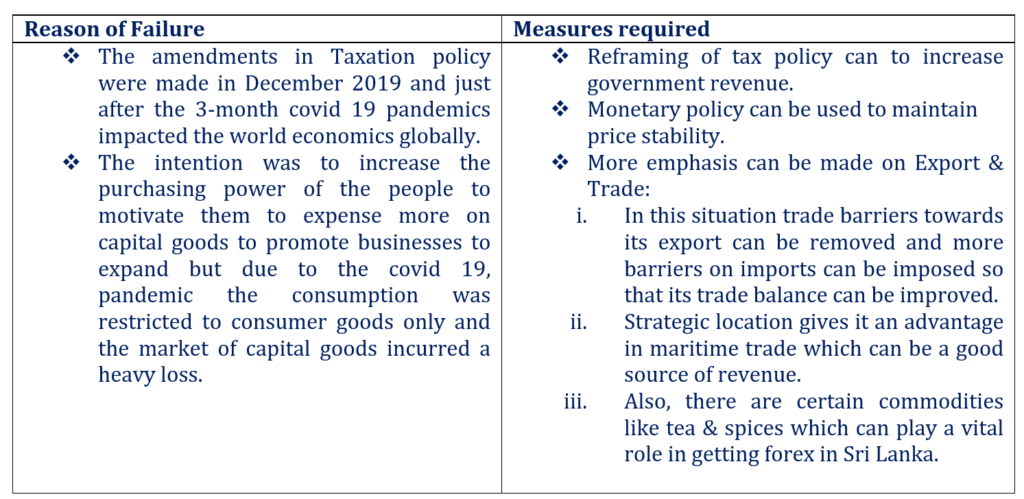
To increase the purchasing power in hands of the people, the Government of Sri Lanka made large tax cuts that impacted its revenue and fiscal policy. These cuts were mainly- increase in free tax threshold resulting in a decline in over 33.5% of registered taxpayers, reducing VAT to 8%, reducing corporate tax from 28% to 24%, the abolishment of the Pay As You Earn (PAYE) scheme and the 2% “nation-building tax” which financed infrastructure development, that resulted in huge revenue loss. The Sri Lankan government was aware of revenue loss because of the large tax cut but they considered it as an “Investment” with a view that it will increase the purchasing power of the people which will lead to economic growth.
2. External Debt:

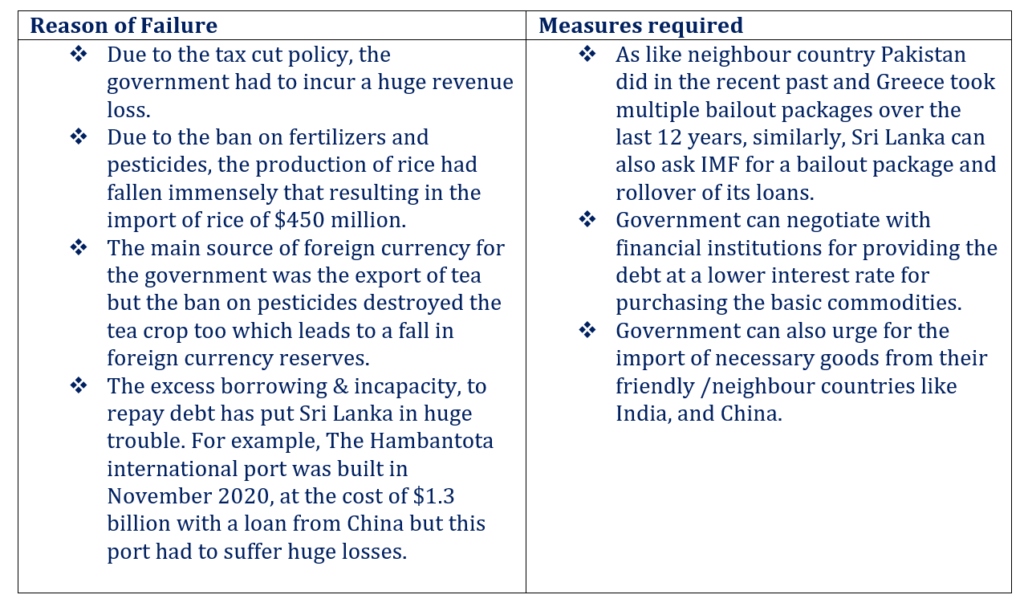
Till February, the country was left with only $2.31 billion in its reserves but faced debt repayments of around $4 billion in 2022, including a $1 billion international sovereign bond (ISB) maturing in July.

The government also repaid US$500 million in International Sovereign Bonds which was due in January 2022 despite growing opposition from economic analysts and experts who all advised the government to postpone the ISB payment to preserve the foreign reserves.

Quick economic decisions & implementation of various policies was the major reason behind the revenue loss and leads to default in repayment of debt & at the same time resulted in a decline in its credit rating which ultimately creates a barrier to raising additional debt for further development.
3. Agricultural crisis:

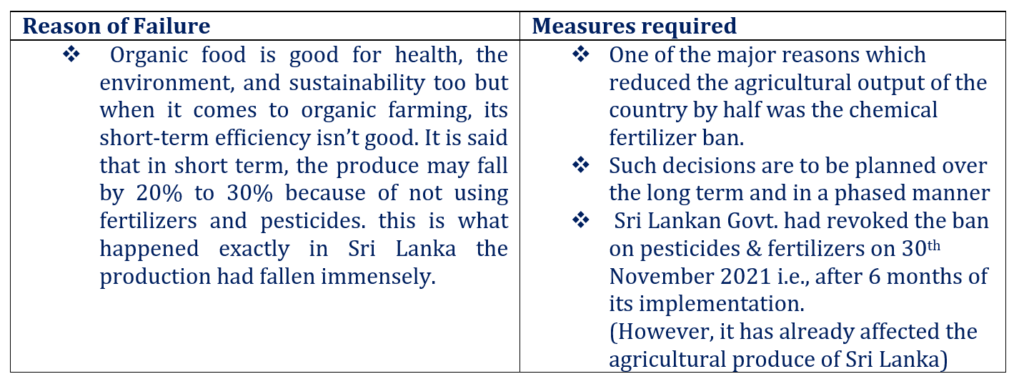
In the 2019 elections, President Rajapaksa had promised that he would convert the country’s agriculture to organic. In this campaign, he spoke about how over 10 years he would shift agriculture to 100% organic. And then he came up with a sudden decision.

Overnight there was a nationwide ban on synthetic fertilizers and pesticides. He wanted the country to overnight become a country that practices 100% organic agriculture. There was another reason to make this decision to cut down imports. Since synthetic fertilizers and pesticides were imported into the country. The Government thought to save some money by banning the import of fertilizers and Pesticides.
4. Tourism:

The country's tourism sector represented over one-tenth of the GDP of Sri Lanka. The sector was negatively affected by the 2019 Easter bombings, and the COVID-19 pandemic prevented recovery.
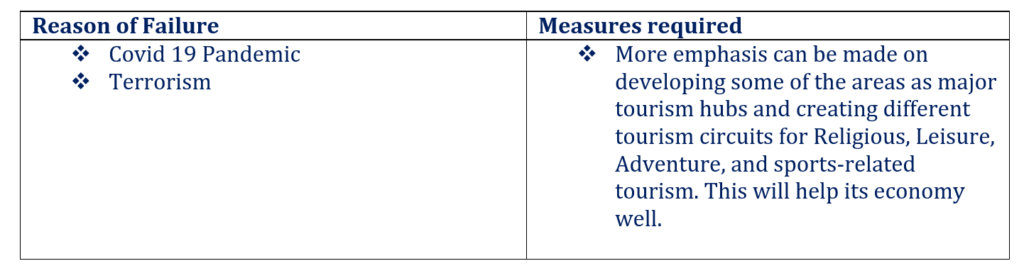
Impact of Crisis

  1. Electricity and fuel shortage:

The economic crises have resulted in a decline in electricity, fuel, and cooking gas consumption, resulting from shortages. Finance Minister Basil Rajapaksa urged all government authorities to switch off all street lights in an attempt to conserve electricity. Nearly 1000 bakeries have been shut as a response to shortages of cooking gas.

2. Inflation

Till February 2022, inflation was 17.5%. The year-on-year increase in inflation for food was 24.7%. while non-food items saw an 11% rate. The year-on-year change (Feb 2021 to Feb 2022) for local red chilies increased by 60%, local potato by 74.8%, and rice by 64%.

3. Exports:

Due to the prevailing economic crisis in Sri Lanka; leading textile brands including Zara, Mango and H&M have diverted their attention from Sri Lanka to India to place their orders. It has seen a huge export demand for tea and textiles in India due to the worsening economy in Sri Lanka.

IV.Impact on India of economic crisis in Sri Lanka:

For any country, crisis and instability are bad for its citizens. But it also has a bad impact on the neighbouring countries. If the situation in Sri Lanka continues to worsen, there will be more refugees in India. There may be several effects of this on India as well like China may gain its influence in the island country since Sri Lankan government has asked for $2.5 billion in emergency aid. Due to the absence of labour and non-availability of transportation facility, many of our shipments lying at Sri Lankan port.

Authors:

Vikash Parashar

Associate Consultant | vikash.parashar@masd.co.in | LinkedIn Profile

Shubham Yadav

Associate Consultant | shubham.yadav@masd.co.in | LinkedIn Profile
Add Your Heading Text Here

Explore More

February 11, 2026

Team Bilimoria

How Artificial Intelligence Is Shaping the Future of Tax Regulation in India

Numerous financial records processed annually, lakhs of tax notices generated and thousands of crores in tax revenue collected, the complexity and scale of regulation have reached unprecedented levels. Traditional methods can no longer keep pace with such scale of data. Therefore, to deal with new emerging problems in tax regulation the tax authorities have started to integrate artificial intelligence to automate the tax operations and fundamentally redefining them. From predictive analytics that flag anomalies, to intelligent systems that auto-populate returns and resolve queries in real time, AI is reshaping the very foundation of tax regulation in India. ‍

Read More

February 11, 2026

Team Bilimoria

DEEMED EXPORTS UNDER GST

Export of goods, in common parlance, means taking goods outside India. The process of supplying the goods(produced/manufactured in the country) on an international scale is known as Export. Such supply of goods and service contribute to the growth of an economy and thus enjoy the perk of being treated as zero-rated supplies. Such supplies are treated as zero-rated supplies under GST. However, there is a certain category of supplies, as notified by the Central Government, wherein the supply is treated as an export, even if the goods do not leave the national borders. The Central Government have notified such categories of supplies of goods as deemed exports. This means that such supplies shall be treated as exports even if such goods are not taken outside India.

Read More

Read All Blogs

BILiMORIA MEHTA & CO. is a leading Chartered Accountancy firm with a rich legacy of serving clients in India and internationally.

info@bilimoriamehta.com

+91 (22) 6697-2111

Company

  • About Us
  • Contact Us
  • Careers
  • Resources

Solutions

  • for Startups
  • for Indian Corporates
  • for Multinational Clientele

Solutions

  • Multinational Corporates
  • Indian Corporates
  • Startups

Services

  • Audit & Assurance
  • Tax & Regulatory
  • Advisory
  • Business & Outsourcing

Resources

  • Blogs
  • Regulatory Updates
© 2024 BILiMORIA MEHTA & Co. All Rights Reserved
Privacy PolicyTerms & Conditions