HomeAbout UsCapabilites
Services
Audit & Assurance
Financial Statement audit & attestationFinancial Reporting advisory
Advisory
Link 1Link 2Link 3
Tax
Link 1Link 2Link 3
Business Services & Outsourcing
Link 1Link 2Link 3

Service

Audit & Assurance

Tax & Regualtory

Advisory

Bussiness & Outsourcing

Audit & Assurance

Financial Atatement Audit & Attestation

Financial Reporting Advisory

Tax & Regualtory

Corporate Tax

Indirect Tax

Finacial Sector

Family Office,estate & succession Planing

Advisory

Mergers & acquisitions

Valuation

Due diligence

Corporate finance & investment banking

Start-up advisory

hgghhgdgfhhgd

IPO advisory

IT risk advisory & assurance

Sustainability & ESG

BFSI advisory

Management consulting

Business & Outsourcing

Finance & Accounting Outsourcing

Global Outsourcing

Compliance

Fund Accouting & Trust Accounting

Virtual CFO

Payroll

Services

Audit & Assurance
Tax & Regulatory
Advisory
Business & Outsourcing

Audit & Assurance

Financial Statement Audit & Attestation

Financial Reporting Advisory

Featured

What is the COSO framework?

September 24, 2024

Going Concern: What It Means for Your Business

August 8, 2024

Fraudulent Financial Reporting

June 19, 2024

Tax & Regulatory

Corporate Tax

Indirect Tax

Financial Sector  

Family, Office, Estate & Succession Planning

Featured

What is the COSO framework?

September 24, 2024

Going Concern: What It Means for Your Business

August 8, 2024

Fraudulent Financial Reporting

June 19, 2024

Advisory

Mergers & Acquisitions

Valuation

Due Diligence

Corporate Finance & Investment Banking

Start-up Advisory

Promoter Restructuring & Succession Planning

IPO Advisory

IT Risk Advisory & Assurance

Sustainability & ESG

BFSI Advisory

Management Consulting

Featured

What is the COSO framework?

September 24, 2024

Going Concern: What It Means for Your Business

August 8, 2024

Fraudulent Financial Reporting

June 19, 2024

Business & Outsourcing

Finance & Accounting Outsourcing

Global Outsourcing

Compliance

Fund Accounting & Trust Accounting

Virtual CFO

Payroll

Featured

What is the COSO framework?

September 24, 2024

Going Concern: What It Means for Your Business

August 8, 2024

Fraudulent Financial Reporting

June 19, 2024

Services

Services

Audit & Assurance
Tax & Regulatory
Advisory
Business & Outsourcing

Audit & Assurance

Financial Statement Audit & Attestation

Financial Reporting Advisory

Featured

What is the COSO framework?

September 24, 2024

Going Concern: What It Means for Your Business

August 8, 2024

Fraudulent Financial Reporting

June 19, 2024

Tax & Regulatory

Corporate Tax

Indirect Tax

Financial Sector  

Family, Office, Estate & Succession Planning

Featured

Invoice Management System (IMS) under GST

September 18, 2024

GST IMPORTANT ANNOUNCEMENTS via CIRCULAR NO. 230 to 233 dated. 11th Sept. 2024

September 18, 2024

GST IMPORTANT ANNOUNCEMENTS IN 54TH GST COUNCIL MEETING (September 9, 2024)

September 13, 2024

Advisory

Mergers & Acquisitions

Valuation

Due Diligence

Corporate Finance & Investment Banking

Start-up Advisory

Promoter Restructuring & Succession Planning

IPO Advisory

IT Risk Advisory & Assurance

Sustainability & ESG

BFSI Advisory

Management Consulting

Featured

Emerging Trends in AIFs: Key Regulatory Developments in FY 2025–26

February 11, 2026

TAXATION OF INFLUENCERS AND CONTENT CREATORS: THE NEW FRONTIER

June 24, 2025

Corporate Social Responsibility (CSR)

June 23, 2025

Business & Outsourcing

Finance & Accounting Outsourcing

Global Outsourcing

Compliance

Fund Accounting & Trust Accounting

Virtual CFO

Payroll

Featured

LEAVE & LAW POLICIES FOR EMPLOYEES IN INDIA

May 9, 2024

SOCIAL SECURITY LAWS- PF & ESIC

April 20, 2024

SOX Compliances

January 6, 2023

Audit & Assurance
Financial Statement Audit & AttestationFinancial Reporting Advisory
Advisory
Mergers & AcquisitionsValuationDue DiligenceCorporate Finance & Investment BankingStart-up AdvisoryPromoter Restructuring & Succession Planning IPO Advisory IT Risk Advisory & AssuranceSustainability & ESGBFSI advisoryManagement Consulting
Tax & Regulatory
Corporate TaxIndirect taxFinancial sector  Family, office, estate & succession planning
Business & Outsourcing
Finance & Accounting OutsourcingGlobal outsourcingComplianceFund accounting & Trust AccountingVirtual CFOPayroll
Solutions
Multinational CorporatesIndian CorporatesStartups
BlogsBlogsCareersContact UsContact Us
Schedule a consultation

WHY ARE INTERNAL CONTROLS REQUIRED FOR CHARITABLE INSTITUTIONS?

By
Team Bilimoria
February 3, 2022

Introduction:

Having effective internal controls is one of the most vital aspects of any organization’s operation. Among organizations that need effective operating internal controls, Charitable Institutions are found to be at the top of the list because they are administered and function by different third-party stakeholders to serve the ultimate needs and goals of numerous participants or beneficiaries.

Contributions & benefit payments, Treasury & investment management, financial reporting, and compliance are the key activities that any Charitable Institution would have and, accordingly, internal controls over these key activities need to be maintained effectively.

Illustrative Internal Controls for the above-mentioned key activities are explained below:

     Contribution & Benefit Payments:

  • The revenue that a Charitable Institution earns from its operations should be within the object of the Charitable Institution.
  • Charitable Institutions should do expenditure only for fulfilling the objects of the Charitable Institution.
  • Cash Donations are allowed to be accepted only up to Rs. 2,000 per person.
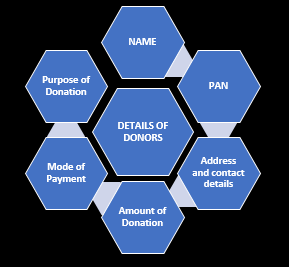
  • As per Income Tax Act, 1961 as amended by Finance Act, 2021 every Charitable Institution who is holding an active Section 80G registration certificate is supposed to furnish details of all the donors to the Income Tax Department annually. The details of donors consist of the following:
  • A separate register for Donations shall be maintained. It should be updated and checked regularly.
  • If a Charitable Institution has received any corpus donation for a specified purpose, make sure that the funds are utilized only for the specified purpose or added to the corpus.
  • Ensure relevant Letters/ Agreements for Earmarked Funds / Sponsorship / CSR are documented.
  • In the case of a Government Grant, ensure timely reporting of expenditure is made over the PFMS portal.
  • In case any Utilisation Certificate is required to be submitted for any Grant, ensure the same is submitted promptly.
  • The proper tracker should be maintained to ensure goals/ objectives/ milestones under various grants/ CSR is achieved on a timely basis.

Treasury & Investment Management:

  • Surprise Cash Verification should be conducted.
  • A proper cash register should be maintained. Cash transactions over INR 5,000 should be restricted.
  • A proper Authorisation matrix should be implemented for banking transactions.
  • Set a threshold of the amount to be maintained under liquid assets like cash/ bank balance. Invest the excess amount in fixed deposits or Mutual Funds.
  • In case it has made investments in Fixed Deposits, it shall maintain a Fixed Deposits Tracker which shall be updated and reconciled regularly.
  • Interest earned on the Fixed deposits made shall be reconciled.
  • For charitable institutions claiming exemption under Income Tax Act, investments shall be made as per section 11(5) of the Income Tax Act.
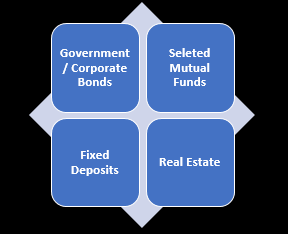
  • Few areas where a Charitable Institution can make investments, subject to specified limits, are as follows:
Financial Reporting and Compliance:

  • Ensure registration is obtained u/s 12A and u/s 80G before accepting Donations. The same should be timely renewed.
  • Donation-related returns should be filed as per Income Tax Act promptly.
  • Anonymous donations, though can be accepted, would entail tax liability.
  • Ensure registration under FCRA is obtained before accepting any foreign currency donations. FCRA registration can be obtained once the expenses on the objects of Charitable Institution exceed INR 15,00,000/-
  • Separate bank accounts and separate books of accounts are required to be maintained for accepting Foreign Currency donations.
  • All Physical Documents such as Purchase Vouchers, Sale Invoices, etc. should be duly stamped by an accountant in charge.
  • In case Charitable Institution has any business activity which is taxable under GST, it should obtain registration once the total turnover exceeds the threshold.
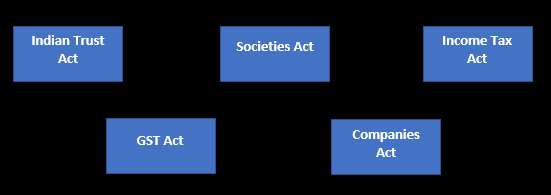
  • Other Statutory compliance that a Charitable Institution needs to comply with are as follows:
Authors:

Shreyans Dedhia

Partner   |   Email: shreyans.dedhia@masd.co.in

Urvesh Shah

Associate Consultant   |   Email: urvesh.shah@masd.co.in
Explore More

February 11, 2026

Team Bilimoria

How Artificial Intelligence Is Shaping the Future of Tax Regulation in India

Numerous financial records processed annually, lakhs of tax notices generated and thousands of crores in tax revenue collected, the complexity and scale of regulation have reached unprecedented levels. Traditional methods can no longer keep pace with such scale of data. Therefore, to deal with new emerging problems in tax regulation the tax authorities have started to integrate artificial intelligence to automate the tax operations and fundamentally redefining them. From predictive analytics that flag anomalies, to intelligent systems that auto-populate returns and resolve queries in real time, AI is reshaping the very foundation of tax regulation in India. ‍

Read More

February 11, 2026

Team Bilimoria

DEEMED EXPORTS UNDER GST

Export of goods, in common parlance, means taking goods outside India. The process of supplying the goods(produced/manufactured in the country) on an international scale is known as Export. Such supply of goods and service contribute to the growth of an economy and thus enjoy the perk of being treated as zero-rated supplies. Such supplies are treated as zero-rated supplies under GST. However, there is a certain category of supplies, as notified by the Central Government, wherein the supply is treated as an export, even if the goods do not leave the national borders. The Central Government have notified such categories of supplies of goods as deemed exports. This means that such supplies shall be treated as exports even if such goods are not taken outside India.

Read More

Read All Blogs

BILiMORIA MEHTA & CO. is a leading Chartered Accountancy firm with a rich legacy of serving clients in India and internationally.

info@bilimoriamehta.com

+91 (22) 6697-2111

Company

  • About Us
  • Contact Us
  • Careers
  • Resources

Solutions

  • for Startups
  • for Indian Corporates
  • for Multinational Clientele

Solutions

  • Multinational Corporates
  • Indian Corporates
  • Startups

Services

  • Audit & Assurance
  • Tax & Regulatory
  • Advisory
  • Business & Outsourcing

Resources

  • Blogs
  • Regulatory Updates
© 2024 BILiMORIA MEHTA & Co. All Rights Reserved
Privacy PolicyTerms & Conditions